
Sasak cooking, the food of Lombok's indigenous people, is some of the spiciest in Indonesia. Expect fiery chilli sambal, grilled meat and fish, sharp shrimp paste and plenty of fresh vegetables, served with rice at simple warungs where a full meal costs very little. This guide covers the dishes to look for, where to try them, and the etiquette that helps on a mostly Muslim island, including what changes during Ramadan.
The short version
- Must-try dishes: ayam taliwang, plecing kangkung, sate rembiga, nasi balap puyung and beberuk terong.
- Best place to eat Sasak food: Mataram, the island's capital, where most of the famous names are.
- In Kuta and the Gilis: look for small family warungs away from the main tourist strips.
- Heat warning: ask for "tidak pedas" (not spicy) or "sedikit pedas" (a little spicy) if you are wary.
- Etiquette: eat and pass food with your right hand, dress modestly away from the beach, and be discreet about eating in public during Ramadan.
The dishes to try
Ayam taliwang
Lombok's most famous dish. A young free-range chicken is split, grilled over coals, flattened, then coated in a chilli, garlic and shrimp paste sauce and grilled or fried again, so it arrives smoky, sticky, sweet and very hot. The name comes from Karang Taliwang, a neighbourhood of Mataram. It is traditionally served with rice, plecing kangkung and beberuk, and is best eaten with your fingers.
Where to try it: Mataram is the home of ayam taliwang. Try Restoran Taliwang H. Moerad, one of the city's original taliwang restaurants; Taliwang Irama 3, a busy local institution; or Taliwang Khas Pak Udin, an evening-only warung in Cakranegara. In Kuta, Warung Chef Satar does a standout version.
Plecing kangkung
Water spinach blanched and served cold with a bright plecing sambal of chilli, shallot, garlic, tomato, shrimp paste and lime, often topped with bean sprouts, fried peanuts and grated coconut. It is fresh, sharp and very spicy, and the classic partner for ayam taliwang. Most Sasak restaurants serve it.
Where to try it: any taliwang restaurant in Mataram, or Warung Singgah Gado Gado & Pelecing Mpok Dije on the coast road near Senggigi, where the sauces are ground by hand.
Sate rembiga
Beef skewers from the Rembiga area of Mataram, marinated in a sweet, spicy paste of chilli, shallot and palm sugar, then grilled until caramelised. Unlike most Indonesian satay, it comes without peanut sauce; the flavour is all in the marinade. It is usually eaten with rice cakes (lontong or ketupat) and a bowl of soup.
Where to try it: Sate Rembiga Ibu Sinnaseh, the best-known name, and Warung Sate Rembiga Utama Bu Ririn, which also sells vacuum-packed sate to take home.
Nasi balap puyung
A cheap, filling rice plate from the village of Puyung in Central Lombok: steamed rice topped with fiery shredded chicken, crisp fried soybeans, sambal and sometimes dried shrimp or fried potato. "Balap" means "race", and the dish is famously quick to serve. It is a favourite breakfast and lunch, often sold wrapped in paper or banana leaf.
Where to try it: Nasi Balap Puyung Inaq Esun at Bazar Mandalika in Kuta, and Nasi Balap Puyung RM. Rinjani in Ampenan.
Beberuk terong
A raw salad of diced small aubergine and tomato, dressed with chilli, garlic, shallot, galangal, grilled shrimp paste and lime. It is crunchy and refreshing, and is served as a side with grilled chicken or fish. Some versions use long beans instead of aubergine.
Where to try it: Dapoer Sasak in Mataram serves it alongside ayam taliwang and plecing in a garden setting, and it often comes as part of a taliwang set elsewhere.
More to look out for
- Sate bulayak: beef or chicken satay with a spicy coconut sauce, eaten with rice steamed in a spiral of palm leaf. Often associated with Narmada, east of Mataram.
- Bebalung: a rich, spiced soup of beef or buffalo ribs, finished with fried shallots.
- Sate tanjung: skewers of fish (often tuna) seasoned with coconut and spices, from North Lombok.
- Ares: a mild, savoury curry of young banana stem, traditionally served at Sasak weddings.
- Ikan bakar: fresh fish grilled over coconut husks with sambal, at its best by the beach in Senggigi, Kuta or the Gilis.
- Jaje (traditional cakes): sweet snacks made from sticky rice, coconut and palm sugar, such as iwel and poteng, sold at markets and roadside stalls.
Where to eat by area
- Mataram: the capital is the best place on the island for Sasak food, with the famous taliwang and sate rembiga names, plus Roemah Langko in a colonial-era house in Ampenan. Worth a half-day trip from Senggigi or Kuta just to eat.
- Kuta and Mandalika: plenty of Western cafés, but also good local warungs such as Yeni's Local Food, Warung Makan Inaq Kari and Rumah Makan Rezeky, a help-yourself buffet with many vegetarian options.
- Senggigi: grilled seafood on the beach at sunset, and roadside warungs along the coast road.
- Gili Trawangan: the night market near the harbour is the place for cheap grilled fish and local dishes, and family warungs such as Warung Dewi serve nasi campur at lunchtime.
- Tetebatu: simple home cooking with vegetables from the surrounding fields at places like Warung Harapan.
Cook it yourself
A cooking class is a good way to understand Sasak food and the spice pastes behind it. Anggrek Putih Lombok Cooking Class near Senggigi teaches with a local family and includes a garden tour, and Kembang Cooking Class in Tetebatu starts by picking herbs in the garden.
Food etiquette on a mostly Muslim island
The Sasak majority are Muslim, alongside Balinese Hindu communities in the west and smaller Christian and Buddhist communities. A little awareness goes a long way.
- Use your right hand for eating, passing food and handing over money. Many locals eat rice dishes with their fingers; spoons and forks are always available.
- Halal food is the norm. Pork is rare outside some Balinese and Chinese restaurants and tourist areas.
- Alcohol is widely available in Kuta, Senggigi and the Gilis, but many local warungs do not serve it. Do not bring your own unless you ask first, and avoid drinking in public in villages.
- Dress modestly when you leave the beach, especially in Mataram and in villages. Cover shoulders and knees.
- Prayer times: some small warungs close briefly for Friday midday prayers.
- Ordering: many warungs display food in a glass cabinet. Point at what you want, and you will be charged by the dish. Prices are usually written up or shown when you pay.
Eating during Ramadan
During the fasting month, many Muslims do not eat or drink from dawn until sunset. In 2027, Indonesia's official holiday calendar puts Idul Fitri, the festival that ends Ramadan, on 10 and 11 March, so Ramadan is expected to begin around 9 or 10 February 2027. The exact dates are confirmed by the Ministry of Religious Affairs shortly beforehand.
- Restaurants in tourist areas stay open, but some local warungs close during the day or cover their windows with curtains.
- Be discreet. Avoid eating, drinking or smoking openly in the street or near mosques during the day, especially outside tourist areas.
- Sunset is special. At buka puasa (breaking the fast), markets fill with stalls selling sweet drinks, snacks and takjil treats. It is a great time to explore and try things, but expect busy roads and slow service as everyone eats at once.
- Nights are noisy. Mosques broadcast prayers and pre-dawn wake-up calls, and the celebrations at the end of Ramadan are lively.
- After Idul Fitri, many businesses close for a few days while staff go home to their families. A week later, Lebaran Topat brings picnics and celebrations to beaches and shrines, especially around Senggigi and Batulayar.
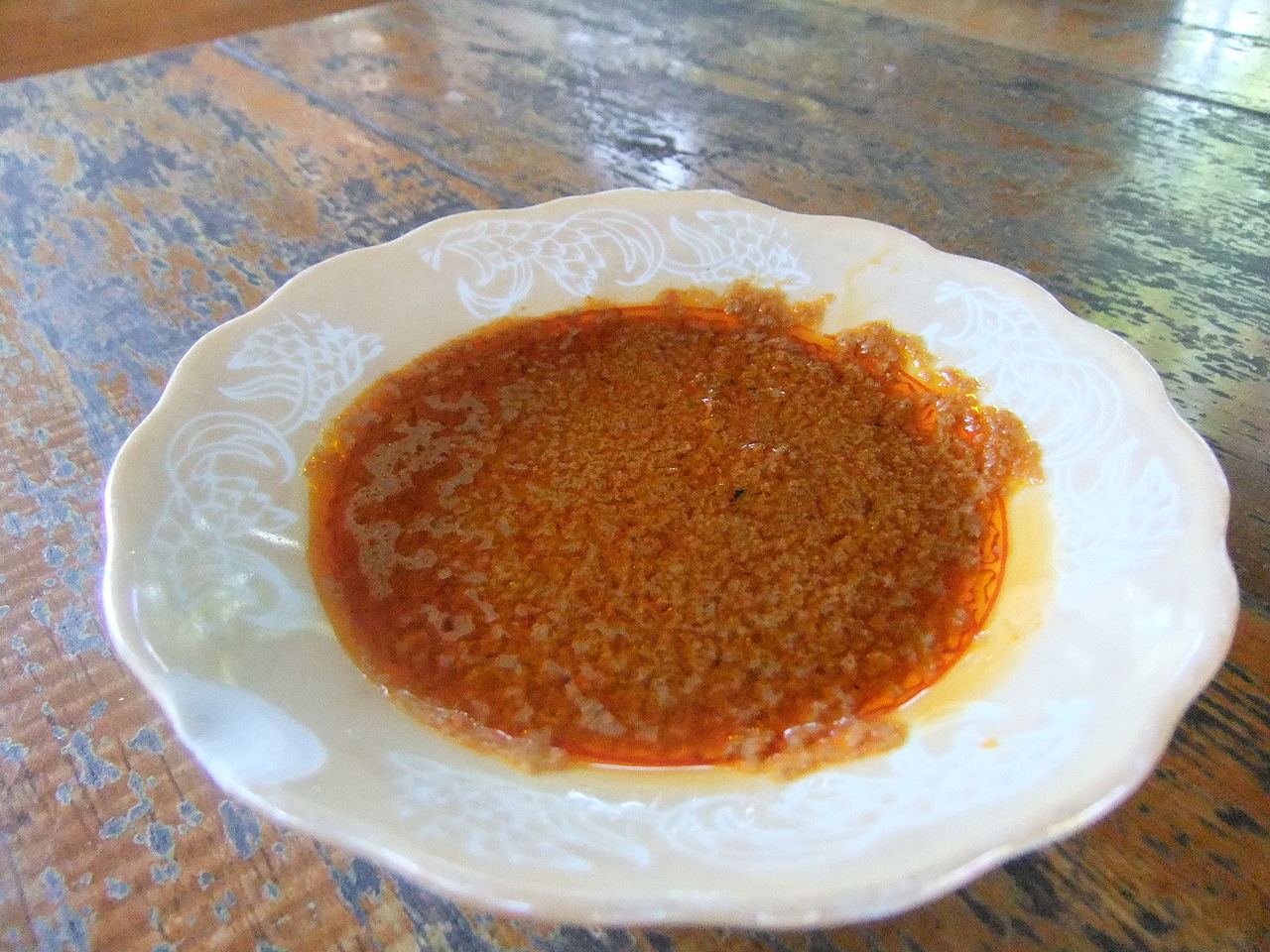 The fiery chilli sambal served with Taliwang-style dishes. Photo: Midori / Wikimedia Commons, CC BY 3.0
Tips
- Sambal on the side is normal. Ask for it separately if you want to control the heat.
- Carry small notes. Warungs often cannot change large ones.
- Busy is good. A warung full of locals at lunchtime is usually the best sign of fresh food.
- Drink bottled or filtered water, and many cafés will refill your bottle.
Plan the rest of your trip
Browse every warung, restaurant and café on the island map, or read our where to stay in Lombok guide to pick a base close to the food you want to eat. For dates of Ramadan, Lebaran Topat and other celebrations, see festivals and events in Lombok.
Last checked in November 2026. Opening hours and menus change, and Ramadan and holiday dates are confirmed by the authorities each year, so check before you go.
Photo: Kokikit